Career profile

Clinical Documentation Specialist.

The CDI specialist sits at the seam between bedside clinical care and hospital revenue cycle. They review patient charts during the stay, partner with physicians to clarify ambiguous documentation, and ensure code assignment matches the clinical reality. It's the highest-paying coding-adjacent role and the standard advancement path for both experienced nurses and senior coders. ACDIS's 2025 salary survey shows 33% of CDI professionals earn $100,000-$119,999, with 11.5% in the $160-200K band and 5.4% earning $200K+.

By Taylor Rupe, editor · Updated

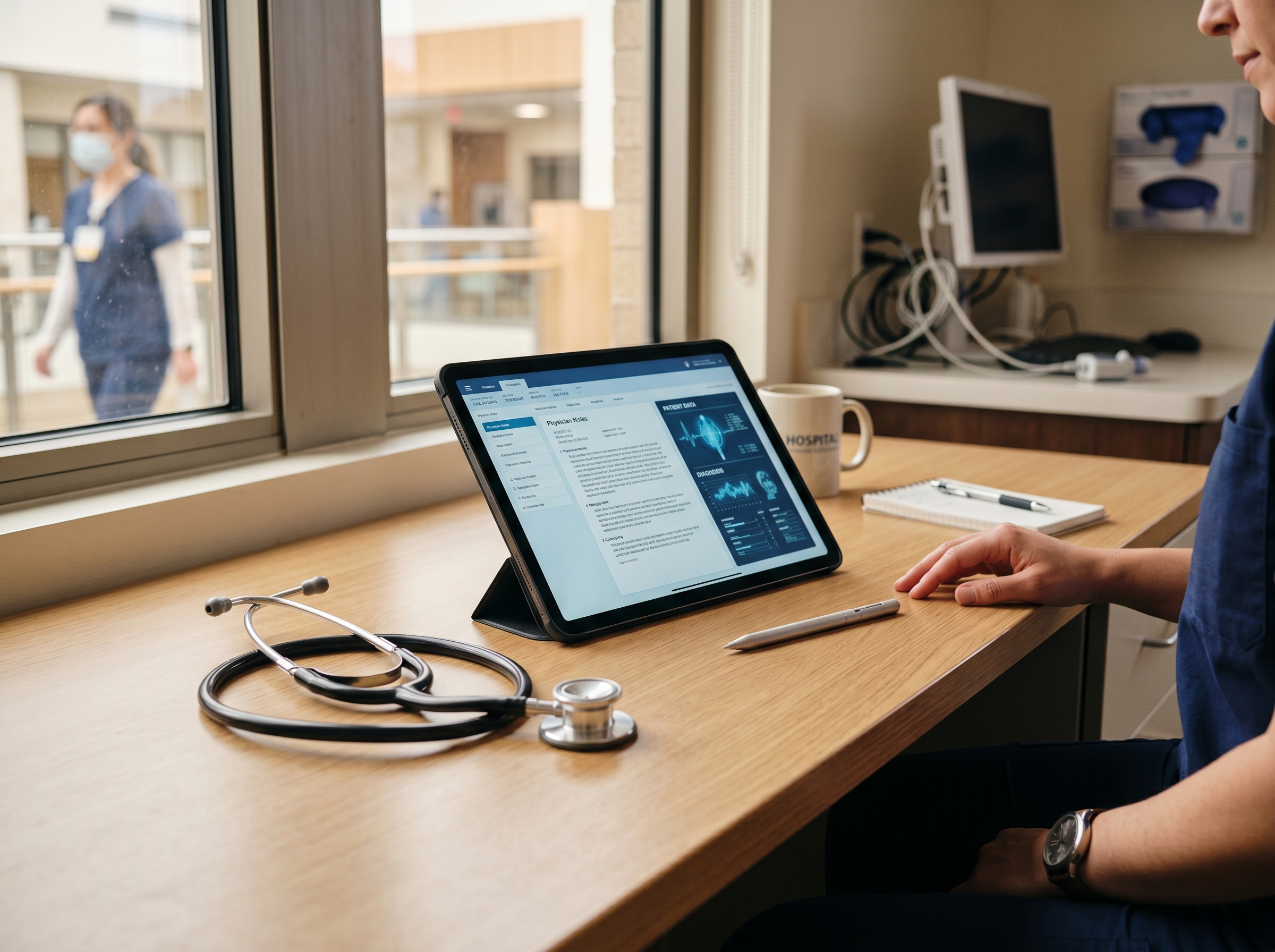
Clinical documentation specialist chart review
$100-120K

Modal salary range

11.5%

Earn $160-200K

2

Competing credentials

$70-108/hr

Senior consulting rate

Key takeaways

The 7 facts that matter most about CDI specialist careers.

  • CDI specialists do concurrent chart review, identifying documentation gaps and querying physicians to ensure accurate MS-DRG assignment and severity scoring.
  • The salary makes the role attractive: 33% earn $100-120K, 11.5% earn $160-200K, 5.4% earn $200K+ per ACDIS's 2025 CDI Salary Survey. Hospital RNs typically take a $20-40K pay bump moving into CDI.
  • Two competing credentials: CDIP (AHIMA) and CCDS (ACDIS). CDIP has no hard experience requirement; CCDS requires 2+ years CDI experience. Most hospitals accept either.
  • Classic entry path: 3-5 years bedside RN (ICU, ED, Med-Surg) → internal apply at hospital CDI program → 1-2 years training → CDIP or CCDS certification.
  • Coder-to-CDI is the other major path: 2-3 years inpatient coding (often CCS-credentialed) → strong understanding of MS-DRG → pivot to CDI. Often pays better than the RN-to-CDI path for the same role.
  • Remote-friendly after 1-2 years on-site. Hospital CDI is increasingly hybrid or remote. Payer-side CDI (risk adjustment, claims integrity) is almost always remote. Travel CDI offers $70-108/hr rates.
  • The role exists because of how hospital reimbursement works. Accurate documentation drives accurate codes drives accurate MS-DRG assignment drives accurate Medicare and commercial payment. CDI ROI typically clears $1-3M annually for a mid-size hospital program.

What it is

What a CDI specialist actually does.

The Clinical Documentation Improvement (CDI) specialist sits at the seam between bedside clinical care and hospital revenue cycle. They review patient charts concurrently — during the patient's hospital stay rather than after discharge — and identify gaps, ambiguities, or specificity problems in physician documentation. They then issue compliant queries (formal questions to the physician) requesting clarification. When the physician responds, the documentation gets updated, and downstream coding teams assign codes that match the clinical reality.

The role exists because of how hospital reimbursement works under Medicare's Inpatient Prospective Payment System (IPPS). Medicare and most commercial payers pay hospitals based on assigned MS-DRGs (Medicare Severity Diagnosis Related Groups) derived from physician-documented diagnoses. If a physician writes "elevated creatinine" but means "acute kidney injury," the MS-DRG difference can be several thousand dollars per case, plus the difference between an accurate severity-of-illness score and an undercounted one. Scaled across a hospital's annual inpatient volume, accurate documentation is worth millions of dollars in legitimate payment plus better quality reporting.

CDI specialists also catch the opposite case: documentation that overstates clinical reality and would lead to upcoding if left alone. The query workflow has to be non-leading per the AHIMA/ACDIS Query Practice Brief — the CDI specialist can't suggest a specific diagnosis to the physician. The compliance constraint is what makes the role technically rigorous and what the CDIP and CCDS credentials test for.

Day-in-life

A typical CDI specialist day.

Most hospital CDI specialists work a Monday-Friday day shift with assigned units (ICU, Med-Surg, specific service lines). A typical day:

Morning: Log in to the CDI software (Optum CDI, 3M CDI, Solventum CDI, Nuance CDI), pull the patient list for your assigned units. Review new admissions and patients with documentation gaps from prior days. Read physician notes, progress notes, nursing assessments, lab results.

Mid-morning: Issue queries via the EHR's secure messaging or the CDI software. Each query must follow the compliant query format: present the clinical findings, ask the open-ended question, list multiple clinically reasonable options including "unable to determine." Don't lead the physician.

Afternoon: Walk the floor or attend unit huddles to maintain physician relationships (CDI is fundamentally a relationship role). Review query responses. Update CDI software with new clarifications. Coordinate with coders on case-level questions.

End of day: Record productivity metrics (charts reviewed, queries issued, query response rate). Most hospital CDI programs expect 12-20 active chart reviews per day. Submit any required reports to the CDI manager.

Productivity expectations vary. Concurrent CDI typically targets 12-20 active inpatient reviews per day. Retrospective CDI (review after discharge) handles higher chart counts. Outpatient CDI (CCDS-O credential) reviews physician practice and clinic notes for risk adjustment work.
Path

Two main paths into CDI work.

The CDI workforce is roughly 70% RN-credentialed and 30% HIM-credentialed (RHIT or RHIA holders, often with CCS). Both paths work:

Path 1: RN → CDI (classic path)

3-5 years bedside RN with strong ICU, ED, or Med-Surg experience → self-study ICD-10-CM, MS-DRG logic, CC/MCC capture → apply internally at the hospital (most CDI programs hire untested RNs and train them) → 1-2 years CDI training in role → sit for CCDS (preferred for clinical-track RNs) or CDIP. Critical-care RN experience is highly valued because of the complex documentation patterns in ICU charts.

Path 2: Coder → CDI

2-3 years inpatient coding with the CCS credential → strong understanding of MS-DRG assignment and ICD-10-CM/PCS → apply for CDI specialist role internally or laterally → 1-2 years CDI training → sit for CDIP (often preferred over CCDS for coder-track candidates). The coder-to-CDI path often pays better at entry because hospitals value the immediate MS-DRG fluency.

Less common path: MD/DO into CDI. Some hospital CDI programs hire physicians (often retired or transitioning out of clinical practice) for the physician advisor role within the CDI team. Physician advisors typically earn $150-200K and serve as peer-to-peer reviewers when CDI specialists need physician backup on complex queries.

For deeper detail on the RN-to-HIM transition, see our Nursing to HIM transition guide.

Credentials

CDIP (AHIMA) vs CCDS (ACDIS).

Two competing credentials, similar respect from employers, different positioning:

DimensionCDIP (AHIMA)CCDS (ACDIS)
IssuerAHIMAACDIS (HCPro)
Exam fee$259 member / $329 non$280 member / $380 non
Experience requiredNone (recommended 2 yrs)2+ years CDI required
Content leanCoding-heavy, compliance, HIMClinical-heavy, physician engagement
Best fitHIM/coding background, RNs comfortable with codesBedside RNs with 2+ yrs CDI

For the full credential breakdown including content domains, prep paths, and pass rates, see our CDIP certification hub.

Holding both is common at the senior CDI level. The combination signals deep CDI fluency and shows up frequently on CDI Manager and CDI Director resumes.

Salary

CDI specialist salary distribution.

ACDIS's 2025 CDI Salary Survey is the industry-standard data source. Headline distribution:

Salary range% of CDI respondents
$80,000-$99,999~31% (2024 data)
$100,000-$119,999 (modal)33%
$120,000-$129,9999.8%
$160,000-$199,99911.5%
$200,000+5.4%

By setting:

  • Hospital staff CDI: $85-115K typical at most acute-care hospitals. Senior CDI specialists at major IDNs and academic medical centers clear $130K.
  • Hospital CDI Manager / Director: $120-160K typical, $180K+ at large IDNs.
  • Payer-side CDI / HCC coder: $80-110K typical, often fully remote. Specialized risk-adjustment CDI (Medicare Advantage) commands the high end.
  • Consulting CDI (Guidehouse, AMN, BRG, Optum Advisory): $90-130K base or $70-108/hr for senior consultants.
  • Travel CDI: $60-90/hr plus housing stipend on 13-week contracts. Top travel rates approach $100K-$130K annualized once stipends are included.
  • Physician Advisor (MD/DO): $150-200K base. Usually retired clinicians or transitioning physicians.

Geographically, California, New York, Massachusetts, and the New Jersey/DC corridor pay 15-25% above the national median. Southern and Midwestern markets are typically 5-10% below the national median. See our CDI specialist salary deep dive for regional cuts.

Remote work

CDI is increasingly remote-friendly.

CDI work shifted heavily remote during and after 2020-2021. The pattern by 2026:

Hospital staff CDI: Increasingly hybrid (2-3 days remote, 2-3 days on-site for physician engagement and rounding). Some hospitals offer fully remote CDI for senior specialists with 3+ years of in-person experience.

Payer-side CDI: Almost always remote. UnitedHealth, Humana, Anthem hire fully remote CDI specialists for risk adjustment and claims integrity work. The trade-off is less variety in chart types than hospital work.

Consulting CDI: Fully remote with occasional client-site visits. Travel can be project-by-project: heavy during onboarding new clients, light during steady-state engagements.

Travel CDI: 13-week contracts at hospital sites. Lives in the hospital's city during the contract, then moves to the next assignment. Premium pay ($60-90/hr) plus housing stipend, typically $20-40K above staff CDI annualized.

The remote constraint: New CDI specialists typically need 1-2 years of in-person hospital experience before unlocking remote roles. Without bedside or hospital coding context, remote CDI is hard to do well. Most fully remote CDI postings explicitly require 2+ years of CDI experience.

Career growth

Where CDI specialists go from here.

Senior CDI / Lead CDI

5+ years experience plus both CDIP and CCDS. Handle complex cases, mentor newer CDI staff, defend high-impact denials. Pay band: $115-145K.

CDI Manager / Director

Manage hospital CDI program. Often requires RHIA or master's. Pay band: $120-180K.

Outpatient CDI / HCC Coder

Pivot to risk-adjustment coding for Medicare Advantage plans. CCDS-O or CRC credentials. Often remote. Pay band: $95-130K.

CDI Consultant

Move to Guidehouse, AMN, BRG, or Optum Advisory. Higher base plus consulting bonuses. Pay band: $120-180K.

CDI Auditor / Compliance

Review CDI program quality, defend audits, build query libraries. Often payer-side or federal contractor work. Pay band: $100-140K.

HIM Director

Move up into broader HIM management. Pay band: $130-220K.

FAQ

Frequently asked questions.

Is CDI a good career change from bedside nursing?+

For experienced RNs (especially ICU, ED, or Med-Surg with 3+ years), CDI is one of the most-cited successful exits from bedside work. The pay is competitive with or higher than bedside RN compensation, the work is intellectually engaging, and the schedule is typically Monday-Friday daytime with no nights or weekends. The catch: you'll need to learn ICD-10-CM, MS-DRG logic, and the query workflow from scratch. Plan 1-2 years of intense learning curve.

Can a non-clinical person become a CDI specialist?+

Yes. Coders with 2-3 years of inpatient coding experience (especially CCS-credentialed) successfully move into CDI without a clinical background. The coder path requires building clinical knowledge through self-study and on-the-job exposure, but it works. About 30% of the CDI workforce comes from coding rather than nursing.

Are physicians annoyed by CDI queries?+

Sometimes. Query volume management and physician relationship work are real parts of the role. Skilled CDI specialists develop relationships, time queries appropriately, and frame them helpfully. CDI programs that train physicians on the "why" of CDI typically see better cooperation. The query-leading rules exist precisely because compliant CDI work cannot pressure physicians toward specific answers.

What's the AI impact on CDI work?+

Augmenting, not replacing. CDI software (Optum CDI, 3M, Nuance, Solventum) now includes AI-based prioritization (which charts need review most urgently), query suggestion (drafting compliant queries that the human reviews), and natural language analysis of physician documentation. The credentialed specialist still owns the query decision and physician relationship. The role is becoming higher-leverage, not less needed.